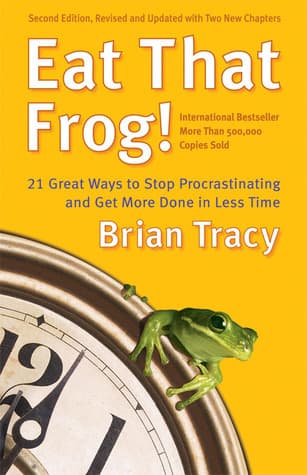
Eat That Frog
Highlights:
- Goal Setting and Planning: The book emphasizes the importance of setting clear goals and creating detailed plans of action to achieve them.
- The 80/20 Rule: The Pareto Principle is introduced, stating that a small percentage of efforts yield the majority of results. Prioritizing high-impact tasks leads to increased productivity.
- Consequences and Motivation: Considering the outcomes of completing or not completing a task helps generate motivation and overcome procrastination.
- Creative Procrastination: Procrastination can be beneficial when used strategically to focus on high-value tasks and eliminate low-priority activities.
- The ABCDE Method: Categorizing tasks based on importance and urgency enables effective prioritization and task management.
- Time Blocking: Allocating dedicated time blocks for specific tasks or activities enhances focus and productivity.
- Overcoming Procrastination: Strategies are provided to understand and overcome procrastination, fostering discipline and urgency in task completion.

Lesson 1: Introduction to "Eat That Frog"
"Eat That Frog" is a popular self-help book written by Brian Tracy, which aims to provide effective strategies for overcoming procrastination, improving productivity, and achieving personal and professional goals. The title of the book is derived from a quote by Mark Twain, emphasizing the idea of tackling the most challenging and important tasks first thing in the morning, thereby increasing productivity throughout the day. This lesson introduces the key concepts and sets the stage for the subsequent lessons.
Lesson 2: Understanding Procrastination
Procrastination is a common challenge that hinders productivity and goal attainment. In this lesson, the book delves into the reasons behind procrastination, such as fear, lack of clarity, and overwhelming tasks. It emphasizes the importance of self-awareness and identifying the underlying causes of procrastination in order to address them effectively.
Lesson 3: Setting Clear Goals
Clear and specific goals are essential for motivation and productivity. This lesson explores the process of setting goals that are aligned with personal values and long-term aspirations. It introduces the concept of "SMART" goals (Specific, Measurable, Achievable, Relevant, and Time-bound) and provides practical tips for creating meaningful and actionable goals.
Lesson 4: Prioritizing Tasks
Effective prioritization is crucial for managing time and productivity. This lesson offers strategies for evaluating tasks based on their importance and urgency, including the Eisenhower Matrix, which categorizes tasks into four quadrants: important and urgent, important but not urgent, urgent but not important, and neither urgent nor important. It emphasizes the need to focus on high-value activities that align with long-term goals.
Lesson 5: Overcoming Procrastination
Building upon the previous lessons, this section explores various techniques to overcome procrastination. It emphasizes the importance of self-discipline, developing positive habits, and taking consistent action. The book introduces strategies like the "Two-Minute Rule," "Swiss Cheese Method," and "Pareto Principle" to combat procrastination and increase productivity.
Lesson 6: Applying Effective Time Management Techniques
Time management plays a vital role in productivity and goal achievement. This lesson introduces practical time management techniques such as setting deadlines, avoiding multitasking, batching similar tasks, and leveraging technology tools to enhance efficiency. It also emphasizes the significance of creating a conducive work environment and minimizing distractions.
Lesson 7: Maintaining Focus and Concentration
In today's fast-paced world, maintaining focus and concentration can be challenging. This lesson provides guidance on enhancing concentration through techniques like time blocking, Pomodoro Technique, and implementing "power hours" where uninterrupted work is prioritized. It also emphasizes the importance of taking breaks, managing energy levels, and cultivating a positive mindset.
Lesson 8: Cultivating Productive Habits
Habits shape our daily routines and greatly impact productivity. This lesson explores the process of cultivating productive habits by focusing on consistency and incremental progress. It emphasizes the power of positive rituals, habit stacking, and implementing a morning routine that aligns with personal goals. The book also offers insights on breaking bad habits and replacing them with more beneficial ones.
Lesson 9: Overcoming Obstacles and Challenges
Obstacles and challenges are inevitable on the path to achieving goals. This lesson delves into strategies for overcoming setbacks, managing stress, and developing resilience. It emphasizes the importance of adopting a solution-oriented mindset, seeking support from mentors or peers, and learning from failures. The book also provides techniques for reframing setbacks as learning opportunities.
Lesson 10: Celebrating Success and Sustaining Motivation
Celebrating achievements and sustaining motivation are vital for long-term success. This lesson discusses the significance of acknowledging progress, rewarding oneself, and maintaining momentum. It explores techniques for staying motivated during challenging times, such as visualizing successand creating a vision board. The book also emphasizes the importance of self-care, maintaining work-life balance, and nurturing personal relationships as sources of motivation and fulfillment.
Lesson 11: Continuous Learning and Improvement
Learning and self-improvement are essential for personal and professional growth. This lesson encourages the pursuit of knowledge, acquiring new skills, and staying updated in one's field. It emphasizes the value of reading, attending seminars, seeking feedback, and investing in personal development. The book also encourages the practice of reflection and self-assessment to identify areas for improvement.
Lesson 12: Applying the 80/20 Rule
The 80/20 rule, also known as the Pareto Principle, states that 80% of the results come from 20% of the efforts. This lesson explains how to apply this principle to prioritize tasks, identify high-impact activities, and eliminate time-wasting tasks. It encourages focusing on the vital few tasks that yield the most significant results and delegating or eliminating non-essential activities.
Lesson 13: Taking Action and Getting Things Done
Taking consistent action is the key to achieving goals. This lesson provides strategies for overcoming the inertia of starting and maintaining momentum. It emphasizes the importance of breaking tasks into smaller, manageable steps, taking the first step, and building momentum from there. The book also addresses common obstacles like perfectionism and analysis paralysis, offering techniques to overcome them.
Lesson 14: Leveraging Technology for Productivity
In today's digital age, technology can be a powerful tool for enhancing productivity. This lesson explores various productivity apps, project management tools, and automation techniques that can streamline tasks and save time. It emphasizes the need for mindful technology usage, setting boundaries, and avoiding digital distractions that can impede productivity.
Lesson 15: Reviewing and Revising Goals
Regularly reviewing and revising goals is essential for staying on track and adapting to changing circumstances. This lesson discusses the importance of periodically reassessing goals, measuring progress, and making necessary adjustments. It emphasizes the need for flexibility and agility in goal setting, allowing for course corrections and embracing new opportunities.
Lesson 16: Building a Supportive Environment
Creating a supportive environment is crucial for maintaining productivity and motivation. This lesson explores the impact of the people we surround ourselves with and encourages seeking support from like-minded individuals. It emphasizes the importance of building a network of mentors, accountability partners, and positive influences who can provide guidance, feedback, and motivation.
Lesson 17: Cultivating a Positive Mindset
A positive mindset is a powerful asset for overcoming challenges and achieving success. This lesson explores techniques for cultivating a positive outlook, such as practicing gratitude, reframing negative thoughts, and focusing on solutions rather than problems. It emphasizes the importance of self-belief, resilience, and maintaining a growth mindset in the face of obstacles.
Lesson 18: Living a Balanced and Fulfilling Life
Productivity is not just about accomplishing tasks; it is also about living a balanced and fulfilling life. This final lesson discusses the importance of maintaining work-life balance, prioritizing self-care, and nurturing personal relationships. It emphasizes that true success is not solely defined by professional achievements but also by overall well-being, happiness, and fulfillment in all areas of life.

Conclusion:
In conclusion, "Eat That Frog" provides a comprehensive guide to overcoming procrastination, improving productivity, and achieving personal and professional goals. Through a series of lessons, the book covers various strategies and techniques for setting goals, prioritizing tasks, overcoming obstacles, and maintaining motivation. By implementing the principles outlined in the book, readers can develop effective habits, enhance time management skills, and ultimately lead a more productive and fulfilling life.